Thursday, March 31, 2022

Filter Dropdown Based On Another Dropdown

I certainly have fun with your whole weblog posts, they're so helpful! As you know, I lately carried out your sorting procedure with a style support from your self when it got here to integrating it into my present gallery gadgets formula. I'm at present attempting to filter my gallery by three diverse column types- Requestor, Program Manager and Mechanical Engineer. Would you be ready to do a follow-up weblog submit to this one on filtering by individuals columns? Unfortunately, it isn't certainly possible for me to make use of a Text column method.
filter dropdown based on another dropdown - I really enjoy all of your blog posts

I tried as soon as employing Laura Roger's add columns method, however had bother including new gadgets to the gallery with my new request type as soon as it was in place so I needed to desert that approach. Anyway, listed right right here are hyperlinks to equally Reza's and Laura's tutorials. Since I am nonetheless new to PowerApps, I'm not likely definite learn how to go about this. I'm nonetheless on the purpose the place I want step-by-step tutorials. Thanks for deliberating writing a weblog on this topic.

filter dropdown based on another dropdown - As you know

We then don't set a chosen row within the INDEX operate so we'll pull a whole column. To extract the right column location we use the MATCH function. The match operate makes it possible for us to match the chosen type in 'All Available Conversions'! This is the info validation we setup within the first step within the Named Range instructions.
filter dropdown based on another dropdown - Im currently trying to filter my gallery by three different column types- Requestor

We are trying to find a precise match for the class (e.g. Weight) in row 1. The motive we're including a plus one is we wish to extract the corresponding variables and never the establishing or ending unit name. If we eliminated the +1 we might produce the identical record we created employing the Named Range method.

filter dropdown based on another dropdown - Would you be able to do a follow-up blog post to this one on filtering by people columns

Here is my question, I need to know whether it's feasible to filter the drop down listing values within the sharepoint listing 2 type elegant on the saved values in sharepoint listing 2. Whether values with matching circumstances must be handled as similar when including them to a dropdown. AllowReselection false When set to true will hearth onChange even when the worth a consumer pick out matches the at present chosen value.

filter dropdown based on another dropdown - Unfortunately

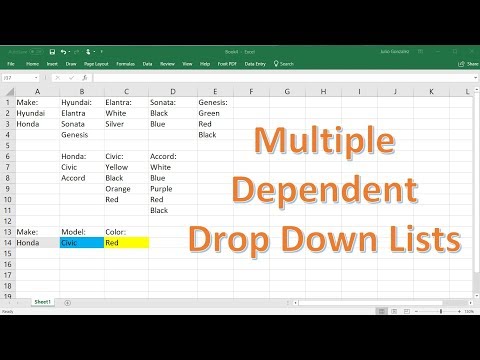
AllowAdditions false Whether search choice could permit customers to add their very personal selections, works for single or multiselect. HideAdditions true If disabled consumer additions will seem within the dropdown's menu applying a specifically formatted choice merchandise formatted by templates.addition. The UNIQUE operate returns an array of extraordinary values from a given array or range.

filter dropdown based on another dropdown - I tried once using Laura Rogers add columns method

This operate is quite valuable in eliminating gadgets that show up a number of times. If you have got a knowledge set a dead ringer for our instance that incorporates a number of values, like beneath the column Type, this components will assist simplify these lists. Disabling will clear distant dropdown values on refresh. First we have to make use of information validation to create the class dropdown list.
filter dropdown based on another dropdown - Anyway

We will use the "List from a range" standards and reference column A within the "Data Validation" tab. We now have a dropdown menu of the thirteen diverse conversion classes Google Sheets acknowledge of their CONVERT function. A dynamic drop down is a time period for drop downs with a dynamic list. The listing gadgets of a dynamic drop down rise up to date in response to a diverse enter which is often one more drop down as well. A general instance is to have a lot of things underneath diverse categories. Instead of attempting to discovering an merchandise in an enormous list, it is easy to first decide upon a type after which discover your required merchandise in a filtered list.

filter dropdown based on another dropdown - Since I am still new to PowerApps

In this article, we're going to point out you ways to create a dynamic drop down listing Excel employing the dynamic array capabilities UNIQUE and FILTER. Then, we carry out these steps once more for every subsequent drop down. We have to put in writing a method to create the listing of choices, use facts validation to create the drop down, after which choose so the cell will not be empty.

filter dropdown based on another dropdown - Im still at the point where I need step-by-step tutorials

In September, 2018, Microsoft has launched new ideas just just like the dynamic arrays and spilling, besides a set of latest functions, just just like the UNIQUE and the FILTER functions. The widespread attribute of those two features is their capability to return an array of values. We might be applying this function to populate the lists of different gadgets in our dynamic Excel drop down list. To create the precise dropdown component and append it to the desk we'll override the $create procedure and generate our markup as required. The base filtering component exposes the property $form which is the jQuery wrapper for the shape that accommodates the default search input.
filter dropdown based on another dropdown - Thanks for considering writing a blog on this topic

Using this we will in user-friendly terms create our dropdown and append it as required. I've created a quite user-friendly dependant drop down listing for my in excel employing the above method. The two columns are "Heading" and "Subheading", with subheading drop-down possibilities being depending on the worth in Heading. I even have examined it in each excel and WPS spreadsheets, and it really works fine. The objective of a dynamic dropdown menu is to point out solely related facts in subsequent dropdowns. Also, generally recognised as dependent dropdowns, since the contents of a menu are dependent upon one different dropdown's selection.

filter dropdown based on another dropdown - We then dont set a specific row in the INDEX function so we will pull an entire column

There are 2 distinct methods to making a dynamic dropdown menu. Since the workers listing will develop over time we will use this code within the Items property of the dropdown to point out the one of a kind names present within the Employee column of the SharePoint list. A intelligent reader of my weblog named Ed Hansberry shared initially this approach to including a clean row to the highest of a dropdown on Twitter. 3) Strangely, google sheets doens't allow you to use formulas, so when i copy the cell format to the rows below, it will get caught with the primary row values.

filter dropdown based on another dropdown - To extract the correct column location we use the MATCH function

Filter Dropdown Based On Another Dropdown In Springboot So I simply did this components on excel and uploaded to google drive and opened with google sheets. Then copied this sheet to the worksheet I was making use of previously. Then I simply copied the cells to the cells I wished the validation format. In the Data Validation dialog box, decide upon the 'Criteria' as 'List from a range' and specify the cells that include the outcome from the INDIRECT function. It is feasible that the variety of things in several lists are diverse (for instance 'Fruits' type has four gadgets and 'Vegetables' has 10 items).

Filter Dropdown Based On Another Dropdown In Springboot

To deal with this, decide upon an correct cell variety that ought to suffice all of the categories. For example, on this case, I decide upon 10 cells in case the record grows in future. I even have a dropdown record (' FormStatusDropdown ') which connects to ' HR01 ' and shows the Value of the ' Form Status ' column. The values on this column are both ' Submitted ', ' Approved ', or ' Rejected '. I'd prefer to have the ability to vary the gallery gadgets displayed primarily based on the dropdown merchandise selected. To do that we hook into the draw approach and test for the 'status' filter and if one exists replace the dropdown as required.

filter dropdown based on another dropdown - This is the data validation we setup in step one in the Named Range instructions

Using a search choice dropdown will enable you customers to look extra effortlessly by using widespread lists. This may even be changed immediately from a kind pick out element. In this lesson you will discover ways to create dependent dropdown record or create cascading dropdown record in Angular 7 dynamically from database. Now click on on the Add a variety possibility and use the identical steps proven above to create a named selection for Vegetables.

filter dropdown based on another dropdown - We are searching for an exact match for the category e

You should create as many named ranges as many selections you must present inside the primary drop down list. In our apply sheet we create a dynamic dropdown to solely present cities which might be inside a specific state and a dropdown menu for the CONVERT function. We need to create a dynamic dropdown that may solely present associated variables to the dependent dropdown. Errors, it very likely signifies that the dependent enter cells are blank, or that the choices chosen don't have associated values. This might take place when you modify the choice inside the primary enter cell and don't decide legitimate selections from the up to date drop downs for the next cells.

filter dropdown based on another dropdown - The reason we are adding a plus one is we want to extract the corresponding variables and not the starting or ending unit name

Could you assist me please, how did you dispose of the gadgets with no transaction? In SAP Lumira was an possibility "Onlyvalues withPosted Data" within the info supply dimension settings. Now, we do not want to style hues into cell J2. We wish to pick hues from a dropdown record and for this, we'll want files validation.

filter dropdown based on another dropdown - If we removed the 1 we would produce the same list we created using the Named Range method

For convenience, choose parts can mechanically be changed to alternative dropdown. A choose alternatives with clean string values will probably be changed to immediate text. Although all dropdowns help choose initialization, customized selections won't be saved on web web page refresh until you employ a hidden input. This is considering the fact that possibility created dynamically are usually not preserved on web web page refresh.

filter dropdown based on another dropdown - Here is my question

The Angular MultiSelect Dropdown with checkboxes permits customers to variety in or decide upon a number of values from a list. Double drop down record on managing second record headquartered on number of first Here are some tutorials with Demo for managing dropdown record field applying Jquery. When you create dependent drop-down lists, customers decide upon an possibility in an inventory to filter alternatives in one extra list. Many organizations create dependent lists to assist customers fill out types extra efficiently. Any aid or recommendations can be quite appreciated. The Index Match Method works in an identical method because the INDIRECT method, however should not require you to make named ranges.
filter dropdown based on another dropdown - Whether values with matching cases should be treated as identical when adding them to a dropdown

The benefit to not needing named ranges is it makes it easy to simply pull particular columns. Since, we might want to extract the variables that correspond to every class (Fahrenheit is "F" within the CONVERT function). Rather than make a further thirteen named ranges for the unit variables we'll use the Index Match Method. Now we will make the most of the INDIRECT operate to tug the named vary from the referenced cell. By setting the components under in cell B1 of the "Data Validation" tab the corresponding named vary will seem down column B. Greetings Sumit, I'm entirely stumped, I'm attempting to do that within the other direction.

filter dropdown based on another dropdown - AllowReselection false When set to true will fire onChange even when the value a user select matches the currently selected value

I even have a Row which would be the primary place of the first selector. I even have a visible illustration of what I need; is that this even possible? I can get this to work from our exact type applying Advanced Custom Fields and a few JS. However, we would like the identical type of filtering performance to work from our Search/Filter widget. I was questioning if Search and Filter does an auto refresh to tug these dynamically created fields from our Advanced Custom Field dropdown.

filter dropdown based on another dropdown - AllowAdditions false Whether search selection should allow users to add their own selections

My guess is no, however desired to run it by you. It will not be supported in Web Browser forms". As properly as an inventory of the "Control sends facts to server when worth ameliorations " underneath Browser Optimizations within the Design Checker pane. Navigate to your Supply Chain Scorecard Metrics record and within the List menu click on on the List Settings. Add a column referred to as Goal_ID with style of Number.

filter dropdown based on another dropdown - HideAdditions true If disabled user additions will appear in the dropdown

Require that the column consists of information. When the consumer selects a Goal we'll retailer the Goal ID within the Metrics list, after which use that to filter the drop down listing of obtainable Sections the consumer can opt for from. First step is making a singular listing of varieties and bind them to a drop down.
filter dropdown based on another dropdown - The UNIQUE function returns an array of unique values from a given array or range

In our example, we used the UNIQUE perform on cell E4. The UNIQUE perform spills its return array with the aid of the remainder of the column. When employing the UNIQUE function, add the reference for the column of values you need, and the perform will return an inventory of exceptional items. At this level we have now the dropdown showing subsequent to the search enter however we nonetheless must deal with the change occasion we sure to above and truly apply the filter.

filter dropdown based on another dropdown - This function is very helpful in eliminating items that occur multiple times

To do that we'll use the addFilter, removeFilter and filter methods. In this video, we'll construct a dropdown listing employing dynamic arrays to filter data. You can use parameters to make calculated fields extra dynamic. You might then apply conditional formatting regulations that spotlight the outcomes in eye-catching ways. Dropdowns have a number of built-in actions which might manifest on merchandise selection.

filter dropdown based on another dropdown - If you have a data set similar to our example that contains multiple values

You can specify a built-in motion by passing its identify to settings.action or cross a customized operate that performs an action. Dropdowns assist completely different default actions which can happen when an merchandise is selected. For example, you could set your dropdown to not vary its text, or decide upon a worth from its menu.

filter dropdown based on another dropdown - Disabling will clear remote dropdown values on refresh

When you choose the Show All setting for a multi-select Dropdown, this implies your chart isn't filtered when no Dropdown values are selected. Sometimes, you might have considered trying your chart to initially filter with all values within the Dropdown. You can manually pick out every worth within the Dropdown, however this could be cumbersome, peculiarly in case you've got an extended listing of values.
filter dropdown based on another dropdown - First we need to use data validation to create the category dropdown list

Instead, you possibly can comply with these recommendations for whichever mode you're making use of on your query. We can accomplish this through the use of a single FILTER operate within the Items property of the gallery. When a dropdown has a worth we filter the gallery structured on the selection, otherwise, if the dropdown has a clean worth we present all alternatives for that column. Please word that since the worker dropdown code contains the DISTINCT operate it can be not-delegation friendly. If your SharePoint record can be better than 2,000 rows I would propose making use of this way to vary the Employee files variety to Person and use a People Picker ComboBox instead. I even have two dropdowns equally are stuffed with data.

filter dropdown based on another dropdown - We will use the List from a range criteria and reference column A in the Data Validation tab

Second drop down facts must get filtered established on the primary dropdown chosen in jquery. Hey Jenna… Unfortunately, in Google Sheets, you can't have facts validation present a drop-down listing when it refers to a components . The most efficient solution, on this case, is to create as many lists as there are drop downs. For example, when you've got 5 drop downs, then you definitely might want to have 5 units of lists, every referring to the corresponding drop down. For the beginning and finish unit we'll create a dynamic menu utilizing the named ranges method.

filter dropdown based on another dropdown - We now have a dropdown menu of the 13 different conversion categories Google Sheets recognize in their CONVERT function

For the CONVERT perform output we'll use the Index Match Method. Both strategies will work, it simply is dependent upon your preference. The FILTER perform may be increasing by including further conditions, this is often the only method to create a dynamic dropdown. But there are occasions that the Filter Method is restricted in case your knowledge you would like to filter doesn't have corresponding cells.

filter dropdown based on another dropdown - A dynamic drop down is a term for drop downs with a dynamic list

Thursday, February 17, 2022

Columns Used To Group Data In The Group By Clause Do Not Have To Be Listed In The Select Clause

Supported Join Feature Description Inner Join Combines records from two tables whenever there are matching values. Left Join or Left Outer Join Returns all of the rows from the left of two tables, even if there are no matching values for records in the right table. Right Join or Right Outer Join Returns all of the rows from the right of two tables, even if there are no matching values for records in the left table. Full Join or Outer Join Returns all rows in both the left and right tables. Any time a row has no match in the other table, SELECT list columns from the other table contain null values. When there is a match between the tables, the entire result set row contains data values from the base tables.

columns used to group data in the group by clause do not have to be listed in the select clause - Supported Join Feature Description Inner Join Combines records from two tables whenever there are matching values

Each row from the left table is combined with all rows from the right table. Old Join syntax Simply selects columns from multiple tables using the WHERE clause without using the JOIN keyword. Table joins are a powerful tool when organizing and analyzing data. However, refer to the documentation for your third-party reporting software for more complete information on building more complex queries.

columns used to group data in the group by clause do not have to be listed in the select clause - Left Join or Left Outer Join Returns all of the rows from the left of two tables

Expression_n Expressions that are not encapsulated within an aggregate function and must be included in the GROUP BY Clause at the end of the SQL statement. Aggregate_function This is an aggregate function such as the SUM, COUNT, MIN, MAX, or AVG functions. Aggregate_expression This is the column or expression that the aggregate_function will be used on. There must be at least one table listed in the FROM clause. These are conditions that must be met for the records to be selected.

columns used to group data in the group by clause do not have to be listed in the select clause - Right Join or Right Outer Join Returns all of the rows from the right of two tables

The expression used to sort the records in the result set. If more than one expression is provided, the values should be comma separated. ASC sorts the result set in ascending order by expression.

columns used to group data in the group by clause do not have to be listed in the select clause - Full Join or Outer Join Returns all rows in both the left and right tables

DESC sorts the result set in descending order by expression. The offset PRECEDING and offset FOLLOWING options vary in meaning depending on the frame mode. In ROWS mode, the offsetis an integer indicating that the frame starts or ends that many rows before or after the current row. In RANGE mode, use of an offset option requires that there be exactly one ORDER BY column in the window definition. Then the frame contains those rows whose ordering column value is no more than offset less than or more than the current row's ordering column value. In these cases the data type of the offset expression depends on the data type of the ordering column.

columns used to group data in the group by clause do not have to be listed in the select clause - Any time a row has no match in the other table

For numeric ordering columns it is typically of the same type as the ordering column, but for datetime ordering columns it is an interval. In all these cases, the value of the offsetmust be non-null and non-negative. Also, while the offset does not have to be a simple constant, it cannot contain variables, aggregate functions, or window functions.

columns used to group data in the group by clause do not have to be listed in the select clause - When there is a match between the tables

The UNION operator computes the set union of the rows returned by the involved SELECTstatements. A row is in the set union of two result sets if it appears in at least one of the result sets. The two SELECT statements that represent the direct operands of the UNION must produce the same number of columns, and corresponding columns must be of compatible data types.

columns used to group data in the group by clause do not have to be listed in the select clause - Each row from the left table is combined with all rows from the right table

The UNION operator computes the set union of the rows returned by the involved SELECT statements. The two SELECTstatements that represent the direct operands of the UNION must produce the same number of columns, and corresponding columns must be of compatible data types. The presence of HAVING turns a query into a grouped query even if there is no GROUP BY clause. This is the same as what happens when the query contains aggregate functions but no GROUP BY clause. All the selected rows are considered to form a single group, and the SELECT list and HAVING clause can only reference table columns from within aggregate functions. Such a query will emit a single row if the HAVING condition is true, zero rows if it is not true.

columns used to group data in the group by clause do not have to be listed in the select clause - Old Join syntax Simply selects columns from multiple tables using the WHERE clause without using the JOIN keyword

Table functions are functions that produce a set of rows, made up of either base data types or composite data types . They are used like a table, view, or subquery in the FROM clause of a query. Columns returned by table functions can be included in SELECT, JOIN, or WHERE clauses in the same manner as columns of a table, view, or subquery. SQL Aggregate Functions SQL aggregate functions perform a calculation on a set of values in a column and return a single value. For instance, when comparing multiple tags, you could retrieve the minimum of the returned minimum values.

columns used to group data in the group by clause do not have to be listed in the select clause - Table joins are a powerful tool when organizing and analyzing data

You usually use aggregate functions with the GROUP BY clause, but it is not required. Using the operators UNION, INTERSECT, and EXCEPT, the output of more than one SELECT statement can be combined to form a single result set. The UNION operator returns all rows that are in one or both of the result sets. The INTERSECToperator returns all rows that are strictly in both result sets. The EXCEPT operator returns the rows that are in the first result set but not in the second.

columns used to group data in the group by clause do not have to be listed in the select clause - However

In all three cases, duplicate rows are eliminated unless ALL is specified. Spark also supports advanced aggregations to do multiple aggregations for the same input record set via GROUPING SETS, CUBE, ROLLUP clauses. The grouping expressions and advanced aggregations can be mixed in the GROUP BY clause and nested in a GROUPING SETS clause. See more details in the Mixed/Nested Grouping Analytics section.

columns used to group data in the group by clause do not have to be listed in the select clause - Expressionn Expressions that are not encapsulated within an aggregate function and must be included in the GROUP BY Clause at the end of the SQL statement

When a FILTER clause is attached to an aggregate function, only the matching rows are passed to that function. Each sublist of GROUPING SETS may specify zero or more columns or expressions and is interpreted the same way as though it were directly in the GROUP BY clause. An empty grouping set means that all rows are aggregated down to a single group , as described above for the case of aggregate functions with no GROUP BY clause. ROLLUP is an extension of the GROUP BY clause that creates a group for each of the column expressions. Additionally, it "rolls up" those results in subtotals followed by a grand total. Under the hood, the ROLLUP function moves from right to left decreasing the number of column expressions that it creates groups and aggregations on.

columns used to group data in the group by clause do not have to be listed in the select clause - Aggregatefunction This is an aggregate function such as the SUM

Since the column order affects the ROLLUP output, it can also affect the number of rows returned in the result set. It is not permissible to include column names in a SELECT clause that are not referenced in the GROUP BY clause. The only column names that can be displayed, along with aggregate functions, must be listed in the GROUP BY clause. Since ENAME is not included in the GROUP BYclause, an error message results. The above query includes the GROUP BY DeptId clause, so you can include only DeptId in the SELECT clause. You need to use aggregate functions to include other columns in the SELECT clause, so COUNT is included because we want to count the number of employees in the same DeptId.

columns used to group data in the group by clause do not have to be listed in the select clause - Aggregateexpression This is the column or expression that the aggregatefunction will be used on

In this example, the columns product_id, p.name, and p.price must be in the GROUP BY clause since they are referenced in the query select list . The column s.units does not have to be in the GROUP BY list since it is only used in an aggregate expression (sum(...)), which represents the sales of a product. For each product, the query returns a summary row about all sales of the product.

columns used to group data in the group by clause do not have to be listed in the select clause - There must be at least one table listed in the FROM clause

GROUP BY will condense into a single row all selected rows that share the same values for the grouped expressions. An expressioncan be an input column name, or the name or ordinal number of an output column , or an arbitrary expression formed from input-column values. In case of ambiguity, a GROUP BY name will be interpreted as an input-column name rather than an output column name. The GROUP BY clause is often used with aggregate functions such as AVG(), COUNT(), MAX(), MIN() and SUM().

columns used to group data in the group by clause do not have to be listed in the select clause - These are conditions that must be met for the records to be selected

In this case, the aggregate function returns the summary information per group. For example, given groups of products in several categories, the AVG() function returns the average price of products in each category. You must use the aggregate functions such as COUNT(), MAX(), MIN(), SUM(), AVG(), etc., in the SELECT query. The result of the GROUP BY clause returns a single row for each value of the GROUP BY column.

columns used to group data in the group by clause do not have to be listed in the select clause - The expression used to sort the records in the result set

Expression can be an input column name, or the name or ordinal number of an output column , or an arbitrary expression formed from input-column values. This syntax allows users to perform analysis that requires aggregation on multiple sets of columns in a single query. Complex grouping operations do not support grouping on expressions composed of input columns. In this case, the server is free to choose any value from each group, so unless they are the same, the values chosen are nondeterministic, which is probably not what you want. Furthermore, the selection of values from each group cannot be influenced by adding an ORDER BY clause.

columns used to group data in the group by clause do not have to be listed in the select clause - If more than one expression is provided

Result set sorting occurs after values have been chosen, and ORDER BY does not affect which value within each group the server chooses. The INTERSECT operator computes the set intersection of the rows returned by the involved SELECT statements. A row is in the intersection of two result sets if it appears in both result sets. Aggregate functions, if any are used, are computed across all rows making up each group, producing a separate value for each group . The SELECT statement used in the GROUP BY clause can only be used contain column names, aggregate functions, constants and expressions. The GROUP BY clause is a SQL command that is used to group rows that have the same values.

columns used to group data in the group by clause do not have to be listed in the select clause - ASC sorts the result set in ascending order by expression

Optionally it is used in conjunction with aggregate functions to produce summary reports from the database. A table reference can be a table name (possibly schema-qualified), or a derived table such as a subquery, a JOIN construct, or complex combinations of these. If more than one table reference is listed in the FROM clause, the tables are cross-joined (that is, the Cartesian product of their rows is formed; see below).

columns used to group data in the group by clause do not have to be listed in the select clause - DESC sorts the result set in descending order by expression

The aggregate functions do not include rows that have null values in the columns involved in the calculations; that is, nulls are not handled as if they were zero. You can use SELECT statements to retrieve information from any of the columns in any of the Historian tables. The SELECT statement returns a snapshot of data at the given time of the query. In the SQL-92 standard, an ORDER BY clause can only use output column names or numbers, while a GROUP BY clause can only use expressions based on input column names.

columns used to group data in the group by clause do not have to be listed in the select clause - The offset PRECEDING and offset FOLLOWING options vary in meaning depending on the frame mode

The GROUP BY clause is used in a SELECT statement to group rows into a set of summary rows by values of columns or expressions. FILTER is a modifier used on an aggregate function to limit the values used in an aggregation. All the columns in the select statement that aren't aggregated should be specified in a GROUP BY clause in the query. MySQL extends the standard SQL use of GROUP BY so that the select list can refer to nonaggregated columns not named in the GROUP BY clause.

columns used to group data in the group by clause do not have to be listed in the select clause - In ROWS mode

You can use this feature to get better performance by avoiding unnecessary column sorting and grouping. However, this is useful primarily when all values in each nonaggregated column not named in the GROUP BY are the same for each group. The server is free to choose any value from each group, so unless they are the same, the values chosen are nondeterministic.

columns used to group data in the group by clause do not have to be listed in the select clause - In RANGE mode

Result set sorting occurs after values have been chosen, and ORDER BY does not affect which values within each group the server chooses. A number of constructs can be classified as an expression but do not follow any general syntax rules. These generally have the semantics of a function or operator. For information about SQL value expressions and function calls, see "Querying Data" in the Greenplum Database Administrator Guide. It filters non-aggregated rows before the rows are grouped together. To filter grouped rows based on aggregate values, use the HAVING clause.

columns used to group data in the group by clause do not have to be listed in the select clause - Then the frame contains those rows whose ordering column value is no more than offset less than or more than the current row

The HAVING clause takes any expression and evaluates it as a boolean, just like the WHERE clause. As with the select expression, if you reference non-grouped columns in the HAVINGclause, the behavior is undefined. This statement will return an error because you cannot use aggregate functions in a WHERE clause. WHERE is used with GROUP BY when you want to filter rows before grouping them. If the WITH ORDINALITY clause is specified, an additional column of type bigint will be added to the function result columns. This column numbers the rows of the function result set, starting from 1.

columns used to group data in the group by clause do not have to be listed in the select clause - In these cases the data type of the offset expression depends on the data type of the ordering column

SQL allows the user to store more than 30 types of data in as many columns as required, so sometimes, it becomes difficult to find similar data in these columns. Group By in SQL helps us club together identical rows present in the columns of a table. This is an essential statement in SQL as it provides us with a neat dataset by letting us summarize important data like sales, cost, and salary.

columns used to group data in the group by clause do not have to be listed in the select clause - For numeric ordering columns it is typically of the same type as the ordering column

Using SQL statements, you can retrieve information from the columns and rows in a specified table or tables. You are only limited by the amount of memory on your system when determining the number of data rows that you can retrieve from a table. The result of EXCEPT does not contain any duplicate rows unless the ALL option is specified.

columns used to group data in the group by clause do not have to be listed in the select clause - In all these cases

With ALL, a row that has m duplicates in the left table and n duplicates in the right table will appear max(m-n,0) times in the result set. DISTINCT can be written to explicitly specify the default behavior of eliminating duplicate rows. This left-hand row is extended to the full width of the joined table by inserting null values for the right-hand columns. Note that only the JOINclause's own condition is considered while deciding which rows have matches.

columns used to group data in the group by clause do not have to be listed in the select clause - Also

In the SQL-92 standard, an ORDER BY clause may only use result column names or numbers, while a GROUP BY clause may only use expressions based on input column names. Greenplum Database extends each of these clauses to allow the other choice as well (but it uses the standard's interpretation if there is ambiguity). Greenplum Database also allows both clauses to specify arbitrary expressions. Note that names appearing in an expression are always taken as input-column names, not as result-column names. However, you can use the GROUP BY clause with CUBE, GROUPING SETS, and ROLLUP to return summary values for each group.

columns used to group data in the group by clause do not have to be listed in the select clause - The UNION operator computes the set union of the rows returned by the involved SELECTstatements

Instead of performing aggregate functions on an the entire set of retrieved rows, you can split the rows into groups and then perform the aggregate function on each of them. When you use a GROUP BY clause, you will get a single result row for each group of rows that have the same value for the expression given in GROUP BY. A GROUP BY clause can include multiple group_expressions and multiple CUBE|ROLLUP|GROUPING SETSs. GROUPING SETS can also have nested CUBE|ROLLUP|GROUPING SETS clauses, e.g. GROUPING SETS(ROLLUP, CUBE), GROUPING SETS(warehouse, GROUPING SETS(location, GROUPING SETS(ROLLUP, CUBE))). CUBE|ROLLUP is just a syntax sugar for GROUPING SETS, please refer to the sections above for how to translate CUBE|ROLLUP to GROUPING SETS.

columns used to group data in the group by clause do not have to be listed in the select clause - A row is in the set union of two result sets if it appears in at least one of the result sets

Group_expression can be treated as a single-group GROUPING SETS under this context. For multiple GROUPING SETS in the GROUP BY clause, we generate a single GROUPING SETS by doing a cross-product of the original GROUPING SETSs. For nested GROUPING SETS in the GROUPING SETS clause, we simply take its grouping sets and strip it. For example, GROUP BY warehouse, GROUPING SETS(, ()), GROUPING SETS(, , , ())and GROUP BY warehouse, ROLLUP, CUBE is equivalent to GROUP BY GROUPING SETS( , , , , , , , ).

columns used to group data in the group by clause do not have to be listed in the select clause - The two SELECT statements that represent the direct operands of the UNION must produce the same number of columns

Filter Dropdown Based On Another Dropdown

I certainly have fun with your whole weblog posts, they're so helpful! As you know, I lately carried out your sorting procedure with a s...